
EPAL Pallets – New and Used
- New and used EPAL grades
- Quality classes A, B and C
- From 100 pallets
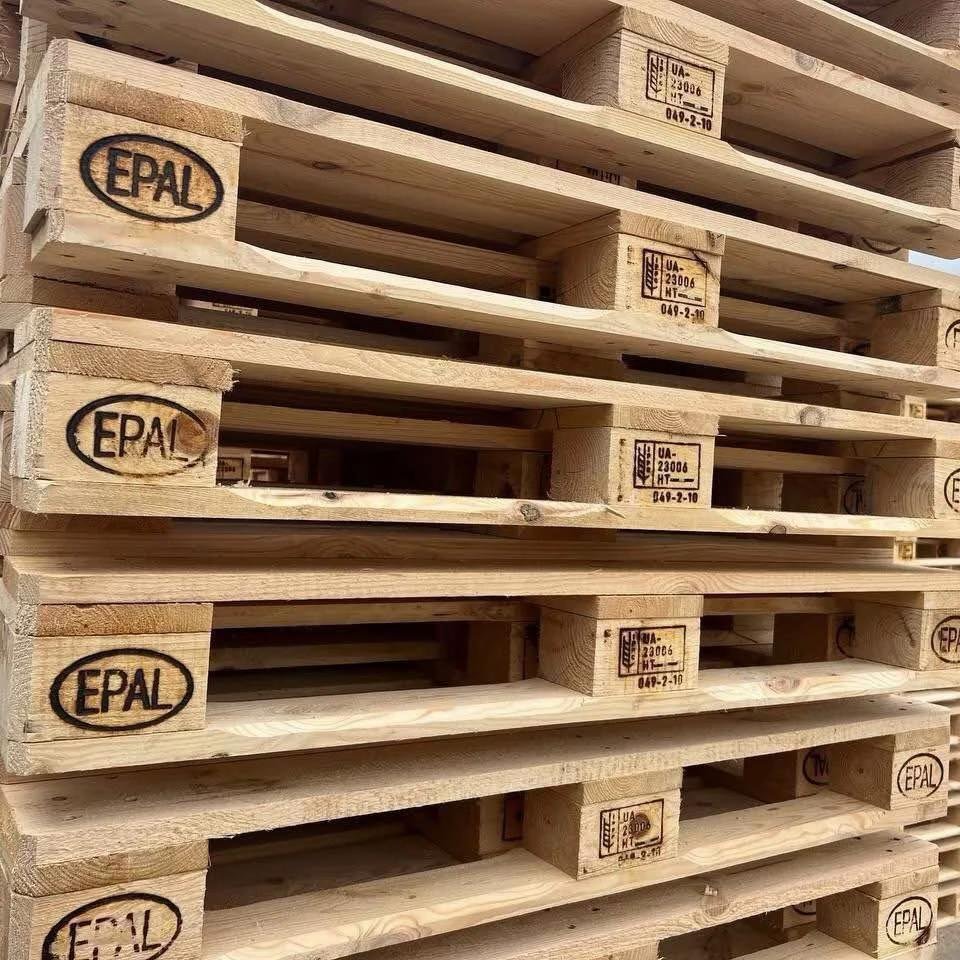
- Size
- 1200 × 800 × 144 mm
- Weight
- about 25 kg
- Safe working load
- 1,500 kg
- Nails
- 78, marked
Trade pricing
EPAL pallet prices
Prices are per pallet, excluding VAT and delivery. Each fixed price applies at the minimum order quantity shown. For mixed loads, exact quantities and eligibility are confirmed in your written quotation.
| Product / specification | Price per pallet | MOQ |
|---|---|---|
| New EPAL 1 pallet | € 12.25 | 510 |
| Used EPAL pallet, Grade A | € 14.25 | 240 |
| Used EPAL pallet, Grade B | € 11.75 | 510 |
| Used EPAL pallet, Grade C | € 9.50 | 510 |
| Reconditioned EPAL, second choice | € 10.95 | 510 |
Availability, grade, build and delivery cost are confirmed for your order. FRAMPAL sends written quotations within 24 hours on business days.
Before you request a pallet quote
Get a useful quotation by matching the pallet to your load, receiving site and required condition.
Confirm the specification
Specify genuine EPAL pallets and the requested class. Exchangeability depends on the pallet meeting EPAL criteria and any agreed receiver requirements.
Share the order and delivery details
Send the quantity (minimum 100), delivery country and postcode, preferred date and unloading equipment. For regular supply, include your expected order frequency.
Check customer acceptance
Confirm your customer’s pallet, hygiene and handling requirements. Final availability, specification, price and delivery are agreed in the written quotation.
The quoted price depends on the format, condition, quantity, treatment and delivery requirements.
Quick answer: An EPAL pallet is a euro pallet (1200 × 800 mm) built by a licensed producer and checked by independent inspectors. Only pallets with the EPAL mark can be swapped in the open EPAL exchange pool. FRAMPAL supplies new and used EPAL pallets in bulk from 100 pallets.
EPAL pallet options

What makes a pallet an EPAL pallet?
The European Pallet Association (EPAL) was founded in 1991 to organise a quality-controlled, open pallet pool. Today around 670 million EPAL euro pallets are in circulation, built by more than 1,700 licensees. Every EPAL pallet follows the same drawing, uses the same wood and nail specifications, and is checked by independent inspection companies.
That shared standard is what makes exchange possible. When a truck delivers 33 EPAL pallets of goods, the receiver can hand back 33 empty EPAL pallets of comparable quality instead of paying for them. Unbranded pallets of the same size cannot be exchanged this way.
How to recognise a genuine EPAL pallet
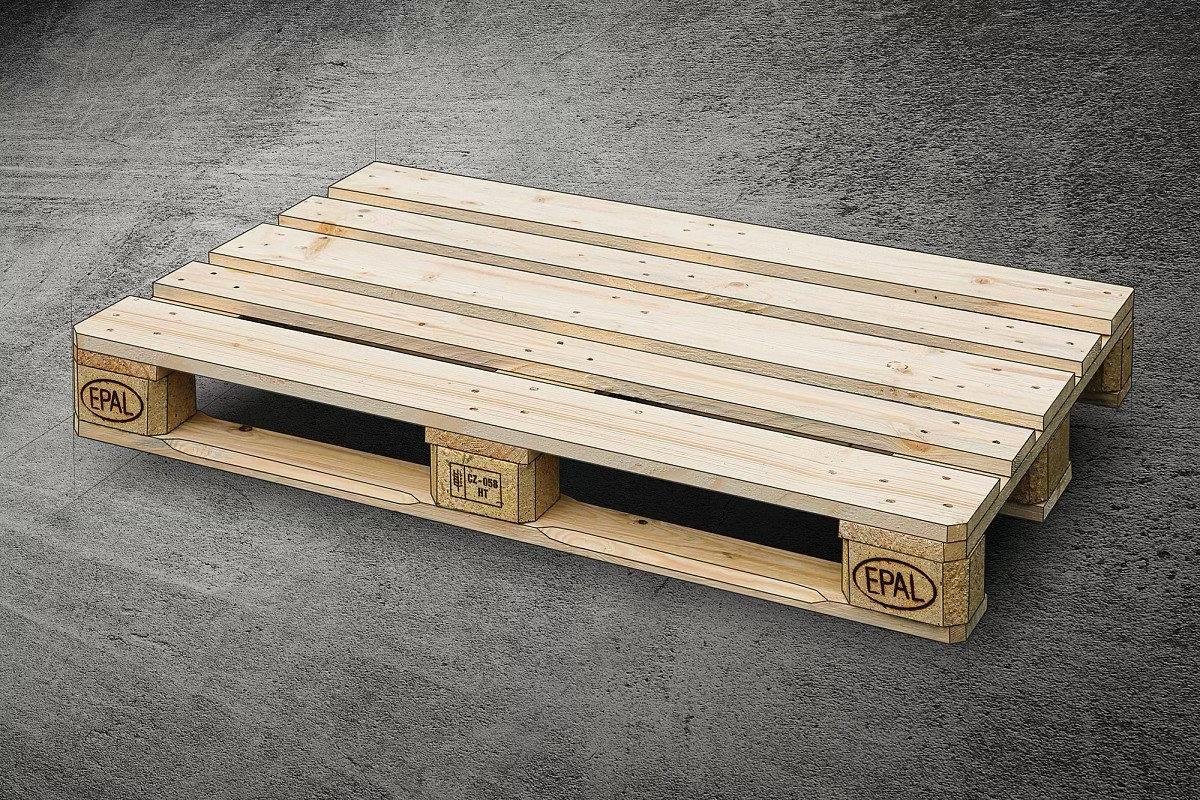
- The EPAL oval on the left and right corner blocks of both long sides.
- The licence and production details on the centre block: producer code, year and month.
- A control clip or inspection mark on the centre block for new pallets.
- Since 2013, EPAL pallets carry the EPAL mark on the corner blocks instead of the old EUR mark.
For a full walk-through of markings, licences and inspections, read our guide to EPAL certification.
EPAL quality classes
| Class | Condition | Typical use |
|---|---|---|
| New | Unused, bright wood, all markings | Automated warehouses, food, exports, pool entry |
| Class A | Used, bright wood, very few signs of use | Retail and consumer goods, exchange |
| Class B | Used, darker wood, signs of use, fully functional | Transport, storage and exchange when EPAL criteria and agreed acceptance are met |
| Class C | Used, functional but visibly worn | Transport, storage and exchange when EPAL criteria and agreed acceptance are met |
New EPAL pallets are heat-treated and marked. For used or repaired pallets, verify the markings, repair status and destination requirements before export.
When do you need EPAL?
Choose EPAL when your goods go to customers that run a pallet exchange, which is standard for most European supermarket chains, many distribution centres and logistics providers. In these flows, a delivery on unbranded pallets usually means losing the pallets or paying for replacements.
When is a standard euro pallet enough?
For one-way export, internal storage or customers who do not exchange pallets, an unbranded euro pallet or a reconditioned pallet is often cheaper. It has the same 1200 × 800 mm footprint and loads the same way.
How to order EPAL pallets
Share your requirements
Class (new, A, B), quantity from 100, delivery address and date.
Receive a quote
We send a written quotation within 24 hours on business days, with price, availability and transport details.
Sorting and checks
Pallets are sorted by class and checked before loading.
Delivery
By truck to your site, up to 33 pallets per layer in a 13.6 m trailer.
Why source EPAL pallets from FRAMPAL
Clear grading
You get the class you ordered, not a mixed load.
One supplier for every pallet
EPAL, standard euro, industrial and custom pallets in one delivery.
ISO 9001 certified
Our quality management system is certified and audited.
Manufacturer since 1997
We know pallets from the production side.
Europe-wide delivery
All of Europe including the UK, plus worldwide export.
Fast reply
Quotes within 24 hours on business days.
EPAL pallet questions
What is an EPAL pallet?
Is every euro pallet an EPAL pallet?
What is the difference between EPAL and EUR pallets?
Are EPAL pallets heat-treated?
What is the minimum order?
Do you buy used EPAL pallets?
Get a quote for EPAL pallets
Tell us the class, quantity and delivery address. Minimum order 100 pallets.
Official EPAL quality classification
EPAL classes A, B and C can remain usable and exchangeable if the binding exchange criteria are met. Partners may agree a particular class; confirm the receiver’s requirements. A damaged or contaminated pallet is not made suitable by its grade label.
New EPAL pallets are heat-treated and marked. For used or repaired pallets, verify the markings, repair status and destination requirements before export.
Official EPAL quality classification