
EPAL Certification & ISPM 15: A Buyer’s Guide
Understand the markings, check used-pallet condition and specify the right pallets for your next delivery. EPAL quality assurance and ISPM 15 treatment serve different purposes.
- Markings explained
- Used-pallet checks
- Export requirements
- EPAL
- Quality & exchange system
- ISPM 15
- Wood packaging treatment
- Standard EPAL 1 size
- 1200 × 800 mm
- Before purchase
- Agree batch acceptance
The key distinction: EPAL identifies a licensed pallet system. ISPM 15 addresses plant-health risks in wood packaging. Check both where required, along with condition and your receiver’s acceptance criteria. A mark is not a guarantee that a damaged pallet is usable.
What EPAL certification tells you
The European Pallet Association licenses manufacturers and repairers and sets requirements for its load carriers. Independent inspections support the system. A supplier selling EPAL pallets and a licensed EPAL manufacturer or repairer are different roles.
For a licence check, use the official EPAL licensee directory and match the operator’s details. This guide does not serve as a licence certificate for FRAMPAL or any other supplier.
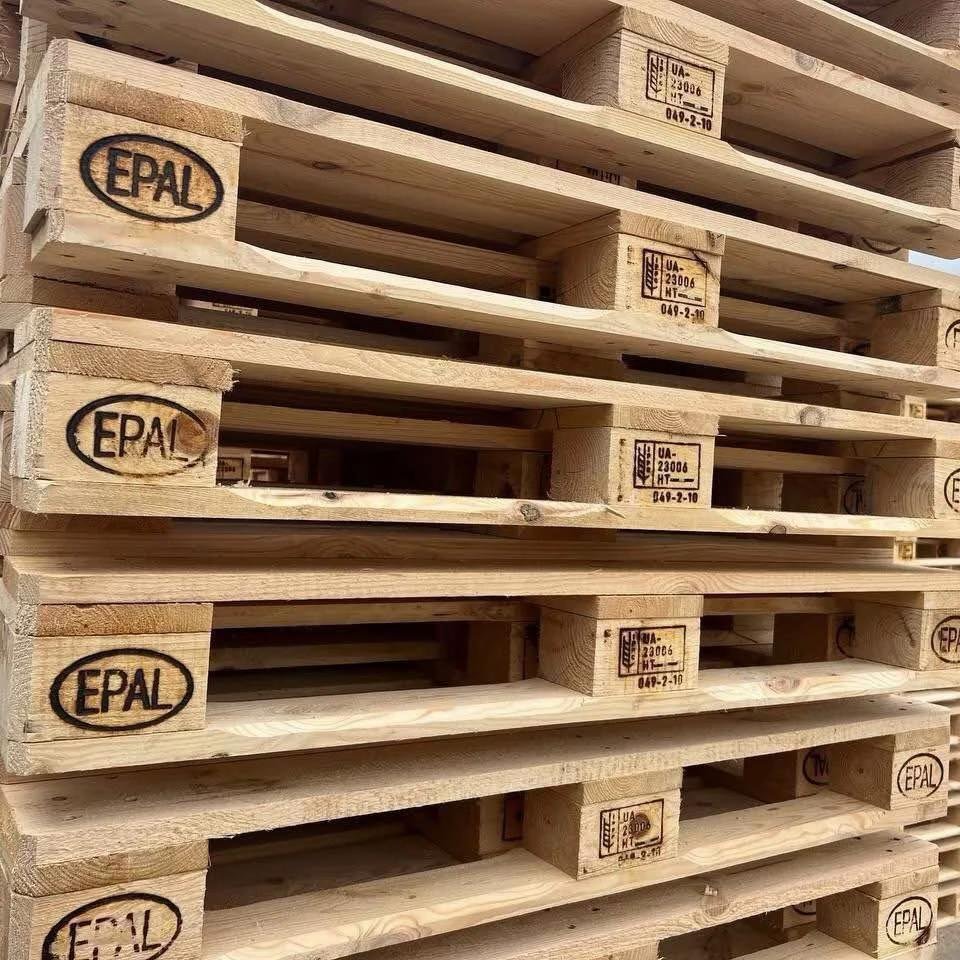
Read the pallet identification
- EPAL oval: the pallet-system branding on corner blocks.
- Producer identification: the EPAL licence number and production date.
- Quality-control staple: part of EPAL’s control system.
- Repair marking nail: identifies a licensed repair where applicable.
Marking methods and layouts can vary. Compare with the official product sheet.
Read the plant-health mark
- IPPC symbol: identifies the ISPM 15 marking system.
- Country code: identifies the country of the authorised marking operator.
- Operator code: the number assigned through the national authority.
- Treatment code: HT indicates conventional heat treatment.
An HT label by itself is not the complete ISPM 15 mark.
Used EPAL pallets: Grade A, B and C
Quality classes help buyers agree the condition they need. They do not replace the binding exchange criteria or checks for a particular load.
| Condition | General appearance | Buying decision |
|---|---|---|
| New | Unused pallet | Confirm the specification, markings and intended application. |
| Class A | Used, typically lighter wood | Agree cleanliness and handling requirements. |
| Class B | Used, typically darker wood | Confirm the receiver accepts the class and batch condition. |
| Class C | Used, with more visible wear; repairs may be present | Check suitability for the handling system and agreed acceptance criteria. |
| Not fit for use | Damage or contamination outside the acceptance rules | Set aside for assessment or licensed repair. |
A, B and C pallets can be exchangeable when the relevant criteria are met. Wood colour alone is insufficient. Unmarked Euro-size pallets have no EPAL status simply because they are graded.
Compare used Euro pallet options · Read EPAL’s official quality classification
ISPM 15: check the route and the pallet
ISPM 15 reduces the risk of spreading pests through wood packaging. Conventional HT requires at least 56 °C throughout the wood, including its core, for 30 continuous minutes. Treatment and marking must follow an authorised system.
New EPAL Euro pallets have been heat-treated under ISPM 15 since 1 January 2010. For used stock, check the actual marks, condition and any repair history before confirming export suitability.
Compliant wood packaging that remains unaltered can generally be reused without routine re-treatment. Repairs and remanufacture have specific requirements; age alone does not establish compliance or non-compliance.

| Route | What to check |
|---|---|
| Within the EU | ISPM 15 is generally not required for intra-EU trade. Check any applicable pest-control measures and receiver specifications. |
| Belgium to Great Britain | Solid wood pallets must meet ISPM 15. Great Britain covers England, Scotland and Wales; check Northern Ireland rules separately. |
| Other non-EU destinations | Check the importing country’s requirements with the receiver or freight forwarder before ordering. |
Your checklist before ordering
Inspect the proposed stock
- Identify the pallet. Ask for clear photographs of the full pallet and its markings.
- Check condition. Look for missing boards or blocks, decay, exposed nails and contamination.
- Check repairs. EPAL repairs require a licensed operation. Ask for clarification where the repair status is unclear.
- Confirm acceptance. Agree the quality class, exchange requirements and handling-system needs.
Send a complete enquiry
- Pallet format and quantity.
- New or used condition and preferred grade.
- Whether EPAL exchange is required.
- Export destination and ISPM 15 requirements.
- Delivery postcode, date and unloading facilities.
- Receiver-specific cleanliness or automation criteria.
Order quantities and delivery costs depend on the selected product. Confirm the specification and availability in your written quotation.
Send your pallet requirements →EPAL certification questions
What does EPAL certification mean?
EPAL licenses pallet production and repair and oversees quality assurance. When buying, check the markings and current pallet condition; an EPAL logo alone does not establish that a used pallet is fit for exchange.
Is a Euro-size pallet automatically an EPAL pallet?
No. A 1200 × 800 mm footprint describes the size. An unmarked Euro-size pallet does not become an EPAL pallet because of its dimensions or an A, B or C grade.
Can Grade B and Grade C EPAL pallets be exchanged?
They can be, provided the pallets meet EPAL exchange criteria and the parties agree the required quality class. Colour and grade alone do not determine acceptance.
Does a used pallet need heat treatment again?
ISPM 15 treatment does not simply expire with age. Compliant, unaltered packaging can be reused without routine re-treatment. Repairs, remanufacture, infestation or destination requirements may change what is needed; confirm the batch before export.
Do pallets shipped from Belgium to Great Britain need ISPM 15?
Solid wood pallets used for shipments into Great Britain must meet ISPM 15 requirements. Great Britain means England, Scotland and Wales; Northern Ireland has separate movement rules.
Is an EPAL mark a food-safety certificate?
No. Confirm cleanliness, odour, contamination risks and your receiving site’s hygiene and handling requirements separately.
Official references
Reviewed on 22 October 2026. Use the issuing organisations’ guidance for current technical and destination requirements.
Specify the right pallet for your shipment
Tell FRAMPAL your pallet type, condition, quantity and delivery destination so we can prepare a written quotation.